


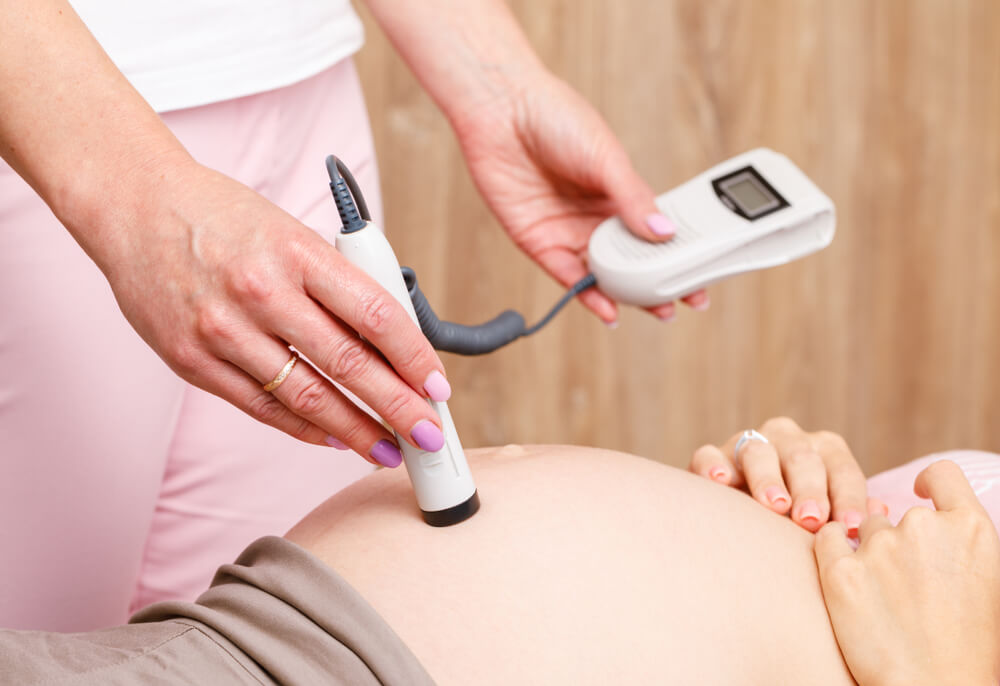
There are several screenings and prenatal diagnostic tests that your OB/GYN carries out during pregnancy. The purpose of prenatal diagnostic tests is to provide details about the health of the baby, which will enable you to optimize your child’s prenatal care and development. OB/GYN’s also carry out diagnostic tests to try and catch any problems ahead of them and address them before it’s too late.
Amniocentesis
This is a prenatal diagnostic testing procedure that involves removing amniotic fluid from the uterus for testing or treatment. Amniotic fluid contains fetal cells and different kinds of proteins. Amniocentesis can reveal a lot of valuable information about a baby’s health, and there are many situations where your doctor may recommend it. These include the following:
- Genetic testing – amniocentesis can check for several genetic conditions, including Down syndrome.
- Fetal lung testing – this process involves extracting a sample of amniotic fluid to assess whether a child’s lungs are mature enough for birth.
- Treatment – if there is excessive amniotic fluid in the uterus, amniocentesis can drain excess fluid from the uterus.
- Paternity testing – this procedure can also obtain DNA from the fetus and compare it with DNA from the potential father.
Prenatal Ultrasound Examination

A prenatal ultrasound examination is a safe and painless procedure used to take images to assess a baby’s shape and position. An ultrasound can be done at any stage of the pregnancy, depending on its use. The general recommendation is that all pregnant women must have at least a single ultrasound during pregnancy. However, women with a high-risk pregnancy are required to have multiple ultrasounds.
In the past, OB/GYNs recommended prenatal ultrasounds in high-risk pregnancies. However, nowadays, they have become a part of routine prenatal care. Ultrasound examination uses waves that bounce off the bones and tissues of the baby to generate images indicating the position and shape of the baby. Your OB/GYN can use them for the following:
- Confirming the approximate date of delivery.
- To detect pregnancy anomalies.
- Check how many babies are present in the uterus.
- To assess the growth rate of the fetus.
- Monitoring of fetal heartbeat and breathing patterns
- Assess the amount of amniotic fluid in the uterus
- Evaluate the location of the placenta
- Serve as a guide during procedures like amniocentesis.
- Looking for fetal structural defects which may be a sign of conditions like Down syndrome,
Prenatal ultrasounds are generally considered safe. However, you can talk to your health care provider to find out how many ultrasounds you will need to have.
Fetal Echocardiogram
Trained ultrasound sonographers usually do a fetal echocardiogram. A health care provider who deals with fetal congenital heart disease will read your results. An echocardiogram can use two techniques. Firstly, it can be done using an abdominal ultrasound.
For this method, your OB/GYN applies a gel to your abdomen and uses an ultrasound probe to take pictures of your baby. This is a painless procedure that does not pose any risk to your baby. On average, the test can take around 45–120 minutes. However, this time depends on what is being examined and how complex it is.
Another technique used for a fetal echocardiogram is an endovaginal ultrasound. Your OB/GYN may use this method during early pregnancy. It makes use of a small transducer that the technician inserts into the mother’s vagina. The device rests against the back of the vagina and takes pictures of the baby’s heart.
Chorionic Villus Sampling
During this prenatal test, chorionic villi are obtained from the placenta and used to run several tests. Samples for this technique can be obtained via the cervix or through the abdominal wall. During pregnancy, the baby obtains nutrition and oxygen from the placenta. This organ also removes unwanted substances and cleans the blood of the fetus. The chorionic villi are part of the placenta, and they contain bits of the baby’s genetic makeup. Your OB/GYN can administer a chorionic villus sampling test from ten weeks of pregnancy onwards.
This test can reveal any chromosomal conditions like Down syndrome and genetic conditions like cystic fibrosis. However, while this chorionic villus sampling can reveal valuable information about the baby’s health, a few risks are associated with the procedure.