Skin cancer is the most common cancer in the United States, with millions of cases diagnosed each year. While any sort of cancer diagnosis can be alarming, early detection often leads to excellent outcomes for skin cancer patients.
When skin cancer is detected and treated before it spreads, the five-year survival rate ranges as high as 99%. But this rate falls significantly if the cancer metastasizes to other areas of the body – which means time is of the essence.
One of the most effective treatments for many types of skin cancer is Mohs micrographic surgery, a specialized procedure that removes skin cancer while preserving as much healthy tissue and skin as possible. But many patients are unfamiliar with what Mohs surgery involves, when it is recommended, or why it may be preferred over traditional surgical excision.
The TopLine MD Alliance connects patients with trusted skin cancer specialists in Florida, including experienced dermatologists and Mohs surgeons who provide comprehensive evaluations, advanced treatment options, and ongoing skin health monitoring. Through coordinated, patient-centered care, these physicians offer expert guidance from diagnosis through recovery.
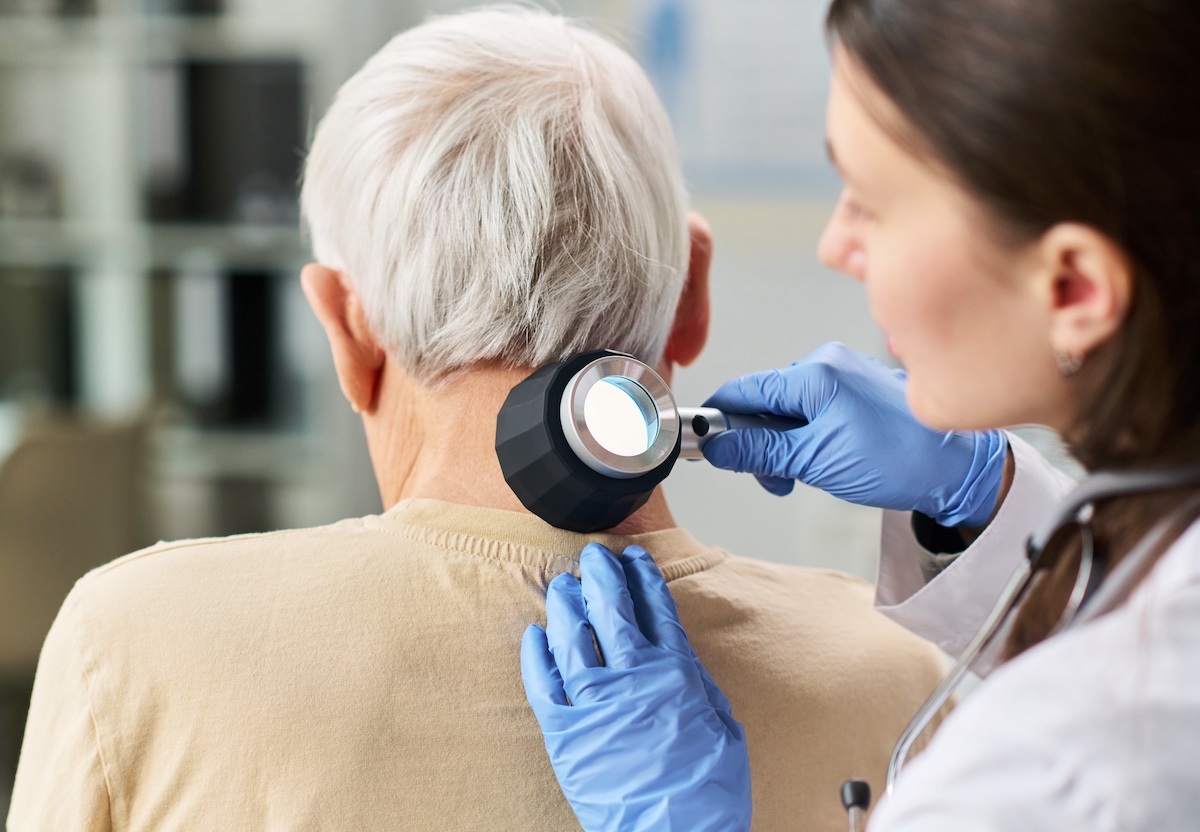
Continue reading to learn more about skin cancer detection, including the early signs of skin cancer, and why routine skin examinations are so important. This blog also explains what Mohs surgery is, how the procedure works, and what patients can expect before, during, and after the procedure.
Skin cancer in the Sunshine State
In the United States, more than 9,500 people are diagnosed with skin cancer every day. And Florida has one of the highest skin cancer rates, ranking second in the nation for
melanoma diagnoses. Because of the year-round UV exposure, dermatologists recommend scheduling annual skin examinations and wearing broad-spectrum sunscreen with SPF 30+ every day.
Long-term exposure to UV rays from the sun (or from artificial sources like tanning beds) is the leading cause of skin cancer. People who burn easily are also at higher risk
- Research shows that just one blistering sunburn in childhood or adolescence more than doubles your chances of developing melanoma later in life.
Other factors that increase skin cancer risk include:
- Age – Skin cancer is most frequently diagnosed in people over age 50.
- Physical traits – People with blond/red hair, blue eyes, and fair skin produce less melanin, the pigment that provides natural protection against UV
- Genetics – Having a personal or family history of skin cancer puts you at greater risk.
- Immune system – People with weakened immune systems also face a higher risk of skin
- Environment – Sunny climates like Florida expose skin to more intense UV radiation.
A TopLine MD Alliance Network dermatologist can provide more details about your individual risk.
Not all skin cancer is the same
Skin cancer is typically categorized into three types, based on the cells where the cancer begins.
Basal cell carcinoma
Basal cell carcinoma is the most common type of skin cancer, accounting for about 80% of all skin cancer cases. But it is also one of the most treatable when caught early.
Basal cell carcinoma begins in the basal cells of the epidermis, which are responsible for producing new skin cells as old ones die off. Basal cell carcinoma grows slowly and often looks like harmless skin wounds or blemishes that do not heal. It is typically found on sun-exposed skin, such as the face, head, neck, and arms.
Signs of basal cell carcinoma include:
- A pearly, translucent, or shiny bump (often pink or skin-colored)
- On darker skin tones, the bump may appear brown, black, or glossy
- A red, scaly patch with or without a raised border
- An open sore, scab, or bleeding spot that heals and then comes back
Squamous cell carcinoma
Squamous cell carcinoma is the second most common type of skin cancer, originating in the flat squamous cells of the epidermis. Squamous cell carcinoma is primarily caused by DNA damage from long-term UV exposure. Like basal cell carcinoma, it is highly curable when detected early – but it can spread if left untreated.
Squamous cell carcinoma also tends to appear on sun-exposed areas like the face, head, neck, and arms. Signs of squamous cell carcinoma include:
- A red, scaly patch that may crust or bleed
- A firm raised bump with a sunken center
- An open sore, scab, or bleeding spot that does not heal for months or heals and continuously returns
- A wart-like or horn-like growth
Melanoma
Melanoma, which is the deadliest form of skin cancer, develops in the cells responsible for producing skin pigment (melanocytes). Melanoma is less common than other skin cancers and accounts for a small percentage of skin cancer cases. However, it is highly aggressive and more likely to spread to other organs – especially if not treated early.
Like other skin cancers, melanoma often appears on sun-exposed areas. For men, melanoma most commonly appears on the torso (particularly the upper back). For women, melanoma most frequently develops on the legs. However, it can appear anywhere on the body, even hidden areas like the soles of the feet, under fingernails or toenails, or in the genital region.
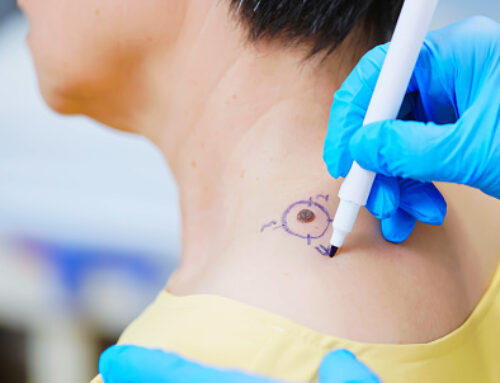
The first sign of melanoma is often a new mole or a change in an existing mole. Dermatologists use this ABCDE guide to spot potential dangers:
- Asymmetry – One half does not match the other half
- Border – The edges are irregular, jagged, or blurred
- Color – The mole has multiple colors or shades
- Diameter – The mole is larger than a pencil eraser
- Evolving – The mole is changing in size, shape, color, or elevation
Dermatologists also rely on the “ugly duckling” sign, which involves searching for any moles or spots that look or feel different from others on your body, even if they don’t meet the ABCDE criteria.
If you notice any of the above signs, or find a mole or spot that is entirely new or looks unusual, schedule an appointment with a TopLine MD Alliance Network dermatologist right away.
What is Mohs surgery?
Mohs micrographic surgery is a specialized form of skin cancer removal that combines surgery with microscopic margin analysis. It is the most effective skin cancer treatment available today and offers the highest cure rate (up to 99%), even if the skin cancer in question was previously treated with another method. Mohs surgery achieves this high cure rate because the cancer is removed with the highest precision in real time, checking 100% of the tissue margins to preserve healthy tissue and skin.
Mohs surgery is performed in stages during a single outpatient visit. After removing a layer of tissue, the Mohs surgeon examines it under a microscope in an on-site lab. If any cancer cells remain, the Mohs surgeon knows exactly where they are and removes another layer of tissue from that precise location while sparing as much healthy tissue as possible. The process is repeated until no cancer cells remain.
If you have Mohs surgery, you will see a physician who is a trained Mohs surgeon. Most Mohs surgeons are dermatologists who have completed extensive training in Mohs surgery.
Who should have Mohs surgery?
Because of its high cure rate, Mohs surgery is often the treatment of choice for high-risk, non-melanoma skin cancers. Skin cancers on the nose, eyelids, lips, ears, hands, feet, genitals, and other cosmetically sensitive areas are considered high-risk.
Other skin cancers that may be best treated with Mohs surgery include:
- Large cancers in lower-risk areas (such as arms and legs)
- Cancers with borders that are difficult to see
- Cancers that have recurred after initial treatment
- Cancers that could not be completely removed
Mohs surgery vs. traditional surgical excision
While Mohs surgery removes skin cancer layer by layer and checks 100% of the tissue margins in real time, traditional surgical excision removes a visible tumor and a predetermined margin of healthy skin. The sample is then sent to a lab for later analysis.
Mohs surgery takes longer but is best for cosmetically sensitive areas where tissue preservation is critical. Traditional surgical excision is faster and may be recommended for skin cancers in areas where extra skin is available (such as arms and legs), skin cancers that have well-defined borders, and other lower-risk skin cancers.
To learn if Mohs surgery is an appropriate treatment for your skin cancer, the first step is to schedule an appointment with a TopLine MD Alliance Network dermatologist, followed by a consultation with a TopLine MD Alliance Network Mohs surgeon near you.
Before, during and after Mohs surgery
Before the surgery
Once your Mohs surgery is scheduled, you will receive a detailed list of pre-operative instructions. For example, you may be asked to:
- Stop using certain medications
- Stop smoking
- Not consume certain foods or beverages prior to the procedure
Because it is difficult to predict how long the surgery will take, patients are usually asked to clear an entire day for the procedure. Be sure to ask any questions you have and follow your Mohs surgeon’s instructions closely for the best possible outcome.
During the surgery
Mohs surgery typically starts early in the morning and is completed the same day, depending on the extent of your skin cancer. You will stay awake throughout the procedure but will receive local anesthesia to numb the surgical area.
Once the area is numb, your Mohs surgeon removes the visible skin cancer along with a thin layer of surrounding tissue. If there is still evidence of cancer cells, more layers will be removed until the area is cancer-free. Although there are always exceptions, most skin cancers require 1-3 stages for complete removal.
After the surgery
When the surgery is complete, your Mohs surgeon assesses the wound and discusses your options for any necessary reconstruction. A good cosmetic result is an important part of the recovery process, which is why Mohs surgeons work hard to leave as little tissue damage as possible. If reconstruction is necessary, your Mohs surgeon can usually repair the area on the same day.
Your Mohs surgeon will provide you with detailed instructions for post-operative care, but here are some general tips:
- The surgical site must remain completely dry for the first 24 hours.
- Leave the initial pressure bandage on for the first 48 hours if possible. After the bandage is removed, gently clean the surgical site every day with mild soap and water, then apply a thin layer of petroleum jelly and a new non-stick dressing to keep the wound protected.
- It’s common to experience soreness for several days post-surgery, as well as minor bleeding or oozing.
- Mohs surgery near the eyes, nose, forehead, or scalp may result in significant swelling around the eyes. This swelling typically peaks 48 hours after surgery, which may temporarily affect your ability to work or
- As healing progresses, you may experience skin tightening, itching, or sharp pains around the These sensations are normal and should diminish over time.
- Contact your Mohs surgeon if you have any signs of infection, such as increased redness, swelling, pain, or pus drainage from the wound.
Perhaps the most important thing you can do after Mohs surgery is to prevent future skin cancer by:
- Scheduling an annual skin examination every year
- Limiting your exposure to the Florida sun by wearing broad-spectrum sunscreen with an SPF of 30+ every day
- Watching for any moles or spots that are new or look unusual
Find a provider today
The TopLine MD Alliance is a healthcare alliance of independent physicians and medical practice groups dedicated to enhancing the patient experience. By connecting patients with top-tier providers, diagnostic centers, and imaging facilities, the TopLine MD Alliance aims to deliver high-quality care efficiently and conveniently.
If you are searching for a dermatologist or Mohs surgeon in Florida, the TopLine MD Alliance makes it easy to find a provider near you