Nearly 9 million biopsies are performed in the United States every year, and they remain one of the most effective ways to determine what is happening inside a person’s body. A biopsy is the only definitive way to diagnose cancer and certain health conditions, making biopsies one of the most vital diagnostic tools for physicians.
If you find out that you need a biopsy, you may have a lot of questions. How does the biopsy procedure work? Does a biopsy hurt? And how long will it take to get your biopsy results? The TopLine MD Alliance is here to answer all these questions and more.
While the word “biopsy” can cause anxiety for many patients, a fine-needle aspiration (FNA) biopsy of nodules on the thyroid gland is an ideal example of a minimally invasive procedure that provides fast, accurate, and potentially life-saving results. Learn everything you need to know about biopsies, including fine-needle biopsies, and the major role they play in diagnostic care.
What is a biopsy?
Imaging procedures, such as MRIs, CT scans, and ultrasounds, are very helpful in detecting irregular tissue or abnormal growths throughout the body. However, they can’t diagnose things like infections or immune disorders, and they certainly can’t tell the difference between cancerous and non-cancerous cells.
That’s where biopsies come in. A biopsy is a procedure that involves removing cells, tissue, or fluid from the body for examination under a microscope. You may undergo a biopsy if you have certain signs or symptoms or if your physician has identified an area of concern that needs further testing.
For most cancers, the only way to make a diagnosis is to perform a biopsy to collect cells for closer examination. A biopsy can determine if a suspicious area is cancerous or if you have another health condition, allowing your physician to plan treatment accordingly.
In addition to cancer, your physician may use biopsies to diagnose:
- Infections
- Inflammatory disorders, such as hepatitis (liver), nephritis (kidney), or Crohn’s disease (intestines)
- Immune disorders, such as lupus or chronic pancreatitis
- Endometriosis
- Nerve and muscle conditions
After the diagnosis, your physician may continue to use biopsies to monitor the progression of a disease or health condition and evaluate the effectiveness of treatment.
Types of biopsies
Depending on the type of biopsy you need, the procedure may be performed in your physician’s office or an operating room. All biopsies have the same goal to obtain samples of cells, tissue, or fluid, but they are done in various ways.
Needle biopsy
Needle biopsies, which are the most common type of biopsy, are often used for suspicious areas that a physician can feel through the skin (such as lumps or masses). Needle biopsies are frequently used for diagnosing cancer cells or tumors in the lymph nodes, thyroid, breast, lung, liver, and more. Patients prefer needle biopsies because they are minimally invasive, providing a fast and accurate diagnosis without surgery.
Examples of needle biopsies include:
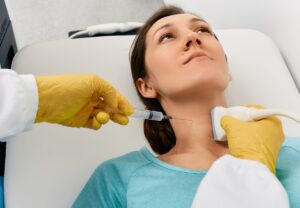
- Fine-needle aspiration (FNA) biopsy – A long, thin needle is inserted into the suspicious area, then a syringe is used to draw out cells, tissue, or fluid for analysis (see more details about fine-needle aspiration biopsies for the thyroid gland below)
- Image-guided needle biopsy – Combines an imaging procedure (MRI, CT scan, ultrasound, etc.) with a needle biopsy to collect cells, tissue, or fluid from areas that are not visible by sight or touch
- Vacuum-assisted biopsy – A suction device increases the amount of cells, tissue, or fluid extracted through the needle, reducing the number of times the needle must be inserted
Endoscopic biopsy
During an endoscopy, a physician uses an endoscope (a thin, flexible tube with a light on the end) to see inside your body. The endoscope can be inserted through your mouth, rectum, urinary tract, or a small incision in your skin. Examples of endoscopic biopsies include:
- Colonoscopy – Collects samples from your colon
- Cystoscopy – Collects samples from your bladder
- Bronchoscopy – Collects samples from your lungs
Other biopsies
Other types of biopsies include:
- Excisional/incisional biopsies – Excisional biopsies remove entire lumps or suspicious areas, while incisional biopsies take samples through cuts in your body
- Liquid biopsies – A blood test that detects signs of cancerous cells
- Bone marrow biopsies – Remove a small sample of bone marrow by needle and syringe to test for blood cancers, blood disorders, and other diseases
- Shave biopsies – A razor is used to scrape up a small sample of skin cells to detect skin cancer
What to expect before the biopsy
TopLine MD Alliance Network physicians are committed to supporting patients as they navigate diagnostic care, and that includes biopsies. Your physician will thoroughly explain the biopsy procedure to you, as well as the type of anesthesia they will use to avoid any pain.
Your physician will also review:
- Your current health status – Be sure to inform them if you have any new issues or symptoms
- Any allergies – Physicians typically wear latex gloves when performing biopsies, so let them know if you are allergic to latex or anything else
- The medications you are taking – Your list should include any over-the-counter medications, prescription medications, vitamins, and herbal supplements
You must follow all pre-procedure instructions, which may include:
- Temporarily stopping certain medications, such as aspirin or blood thinners
- Not eating or drinking fluids before the biopsy
- Arranging for someone to drive you home and/or stay with you after the biopsy
In general, patients who receive local anesthesia (which numbs a small section of their body) can go home after the procedure. Patients who have general anesthesia (which makes them unconscious and unable to feel pain) typically stay overnight in the hospital for observation.
Do biopsies hurt?
Good news, if you are given anesthesia, your biopsy procedure should not hurt. If you have any post-procedure soreness or pain, let your TopLine MD Alliance Network physician know so they can recommend pain medication.
How long do biopsy results take?
Waiting for biopsy results may be the most difficult part of the procedure. Your physician will let you know how and when you can expect to receive your results. It could be as quick as a few hours or take a week or longer, depending on the type of biopsy you had.
If the biopsy detects any abnormal cells or other issues, it’s time to move to the next step – explaining the results and planning your treatment. Some patients may require additional testing as well.
Fine-needle aspiration biopsies and the thyroid gland
To understand the many benefits of biopsies, let’s take a closer look at the fine-needle aspiration (FNA) biopsy, which is one of the least invasive and most preferred types of biopsies.
Physicians can use a fine-needle aspiration biopsy on almost any region of the body for any situation where a tissue or fluid sample would help with diagnosis. Fine-needle aspiration is most commonly used to biopsy newly identified masses in the lymph nodes, breast, and thyroid.
Your thyroid is a small, butterfly-shaped gland located on the front of your neck. As part of your endocrine system, this small gland plays a big part in your overall health. When your thyroid isn’t working properly, it can impact your entire body.
Your thyroid’s main job is to control the speed of your metabolism, which is how your body transforms the food you eat into energy, and every cell in your body needs energy to function. The hormones produced and released by your thyroid can also affect your:
- Heart rate
- Breathing
- Digestion
- Brain development
- Mood
- Body temperature
- Fertility
- And more
Thyroid nodules
A thyroid nodule is an unusual growth of cells that appears on your thyroid gland. Thyroid nodules come in many forms, including solitary (one nodule), multiple (more than one nodule), cystic (fluid-filled), or solid.
Most thyroid nodules do not have any noticeable symptoms. However, if you have several nodules or large nodules, you or your physician may be able to see and feel them. Your physician may also discover them during an imaging procedure for another health issue.
Anyone can develop a thyroid nodule, including children and adults. In most cases, thyroid nodules are benign (non-cancerous) and not a cause for concern. However, some thyroid nodules do contain thyroid cancer, so any known nodule(s) should be evaluated.
The FNA biopsy
During a fine-needle aspiration biopsy, your physician uses a long, thin needle to take a sample of cells from the nodule(s) and sends them to a laboratory for examination. If a nodule is benign, you may not require any treatment at this time. But you will need to see your physician regularly so they can check for any nodule changes.
If any nodules are cancerous, you will likely need surgery to remove them. Your prognosis and treatment plan will depend on numerous factors, including your age, the size of the nodule(s), and whether the cancer has spread to other parts of your body (such as your lymph nodes).
If the results of the biopsy are inconclusive, your physician may repeat the biopsy or suggest surgery to remove the nodule(s) as a precaution.
Find a TopLine MD Alliance Network physician
The TopLine MD Alliance was created by physicians who came together to make healthcare experiences better for patients. We help patients navigate the complex healthcare system, connecting them with top-tier healthcare providers, practices, diagnostic centers, and imaging centers we trust.
Our specialties include family medicine, internal medicine, endocrinology, pediatric endocrinology, and more. To learn more, find a physician near you today.
The TopLine MD Alliance is an association of independent physicians and medical practice groups who are committed to providing a higher standard of healthcare services. The members of the TopLine MD Alliance have no legal or financial relationship with one another. The TopLine MD Alliance brand has no formal corporate, financial or legal ties to any of the physicians or practice groups in the network.