
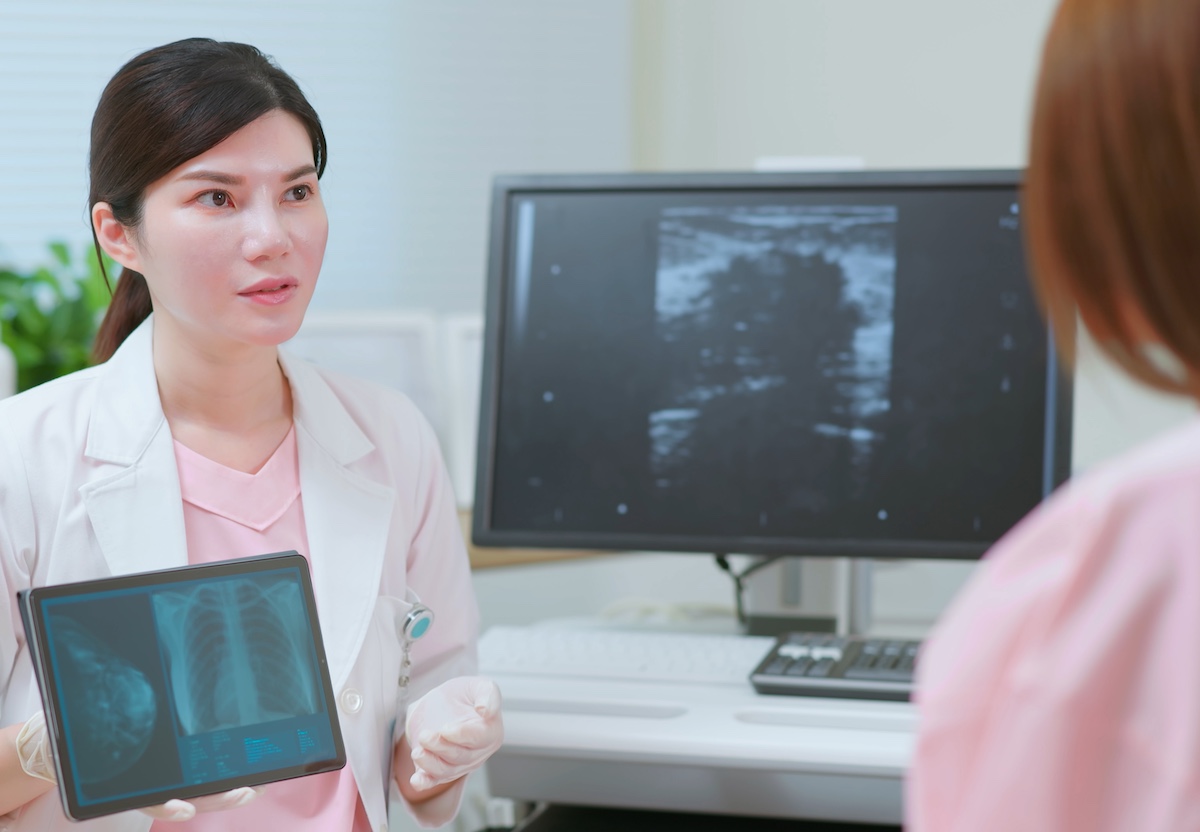
Breast surgery isn’t always about looking better.
While many people associate breast surgery with cosmetic enhancement, numerous breast
procedures are performed to diagnose, treat, or manage medical conditions that affect a patient’s health and quality of life. Examples include breast biopsies, lumpectomies, mastectomies, breast reconstruction after cancer treatment, breast reduction for chronic pain, and surgery for benign breast conditions.
Patients facing these procedures often have questions about why breast surgery is recommended, what their recovery will entail, and how treatment decisions are made. This blog aims to reduce patient anxiety by explaining the medical reasons behind breast surgery and highlighting the collaborative care provided by Florida’s leading breast surgeons, oncologists, plastic surgeons, and other specialists.
TopLine MD Alliance Network physicians provide comprehensive breast health services, helping patients navigate diagnosis, treatment, reconstruction, and long-term follow-up with compassionate, coordinated care. Learn more about common non-cosmetic breast surgeries, why they are performed, what conditions they treat, and what to expect during surgery and recovery.
When breast surgery is medically necessary
There are many key differences between cosmetic breast surgery and medically necessary breast surgery. Here are a few highlights:
Cosmetic breast surgery
- Cosmetic breast surgery changes how your breasts look or feel for personal reasons, such as improving your appearance.
- Cosmetic breast surgery is an elective procedure, which means you do not need it to stay
- Because cosmetic breast surgery is optional, it is rarely covered by
- Examples of cosmetic breast surgery include breast augmentation (to make breasts larger), breast reduction (to make breasts smaller), and breast lift (to lift saggy breasts).
Medically necessary breast surgery
- The purpose of medically necessary breast surgery is to relieve pain or treat a health condition.
- Medically necessary breast surgery is generally covered by insurance, especially when a physician provides proof that surgery is needed.
- Many insurance plans are required by law to cover certain types of medically necessary breast surgery, such as breast reconstruction after a mastectomy.
- Other examples of medically necessary breast surgery include breast reduction (to relieve upper body pain) and lumpectomy (to remove cancerous or non-cancerous growths).
Breast conditions that may require surgery
If you feel a lump in your breast, your first thought may be that you have breast cancer. Because breasts are filled with glands, tissue, and fat, it’s relatively common for patients to develop lumps, cysts, or tumors in their breasts.
Fortunately, most of these growths are benign, meaning they are not cancerous. While benign breast conditions are not life-threatening, they may increase your risk of developing breast cancer in the future or cause other health issues.
Specific breast conditions that may require surgery include:
Breast cancer
Malignant (cancerous) tumors are typically treated with some form of breast surgery, such as a lumpectomy (removing the cancerous tumor) or mastectomy (removing the
entire breast). The primary goal is to physically remove the tumor to prevent the cancer from growing or spreading to other parts of the body. The exact surgery will depend on the size and location of the tumor and the patient’s overall health.
Intraductal papilloma
These small, benign growths develop within the milk ducts of the breast and frequently result in clear or bloody nipple discharge. Physicians often remove them surgically to ensure they are not cancerous.
Fibroadenoma
A fibroadenoma is a smooth, firm lump made of fibrous and glandular tissue. While most fibroadenomas do not need to be removed, your physician may recommend surgery if the lump is large, fast-growing, or causes pain.
Breast abscess
A breast abscess is a painful, pus-filled lump caused by a bacterial infection. Breast abscesses usually develop in breastfeeding women but can happen to anyone. Surgery may be needed to drain the pus and clean the infected area.
Atypical hyperplasia
Atypical hyperplasia is an overgrowth of cells in the breast ducts or glands that significantly increases your breast cancer risk, often making surgery to remove the affected tissue a wise option.
Cysts
Up to 25% of breast lumps are cysts. These fluid-filled sacs are non-cancerous and usually harmless, but very large or painful cysts may need to be drained using a needle or, less commonly, surgically removed.
Common non-cosmetic breast surgery procedures
Now that you know the reasons behind non-cosmetic breast surgery, let’s take a closer look at some of the most common procedures.
Breast biopsy
A breast biopsy is a procedure used to remove a sample of breast tissue for testing. Your physician may recommend a breast biopsy if you have a suspicious area in your breast (such as a lump or other signs of breast cancer) or if a mammogram, ultrasound, or physical breast exam shows any areas of concern.
Breast biopsy procedures include:
- Fine-needle aspiration biopsy – The simplest and least invasive type of breast biopsy, fine-needle aspiration uses a very small needle to remove a sample of fluid or tissue from the suspicious area.
- Core needle biopsy – Core needle biopsy is used to assess breast lumps found by mammogram, ultrasound, or physical breast exam. The physician inserts a thin, hollow needle into the mass through a small incision and collects several tissue samples. Imaging tests may be used at the same time to find the exact location of the mass.
- Surgical biopsy – Surgical biopsy involves removing some or all of the mass for testing, which is usually done only when a needle biopsy isn’t possible. Surgical biopsy is typically performed in an operating room while the patient is under general anesthesia.
Lumpectomy
Lumpectomy – a surgery to remove a portion of tissue from the breast – is most often used to treat early-stage breast cancer, although this procedure can remove non-cancerous growths as well.
Lumpectomy is often chosen for its ability to effectively treat cancer while maintaining the natural shape and appearance of the breast. During a lumpectomy, the surgeon removes the cancerous growth (along with some of the surrounding healthy tissue) to help ensure that all the cancer cells are gone.
A lumpectomy typically takes 60-90 minutes under general or local anesthesia. If the location of the growth is not immediately clear, the surgeon may perform a localization procedure beforehand if the lesion cannot be easily felt to map its exact location. Most patients go home the same day as the surgery, and the removed tissue is sent to a lab to confirm that no cancer cells are present.
Mastectomy
Mastectomy is a breast cancer surgery that removes all or some of a patient’s breast tissue. If you have breast cancer, removing the cancer cells is the best way to stop it from spreading. A mastectomy is designed to remove all the breast tissue where cancer cells are located. However, the patient may need additional cancer treatments (such as chemotherapy or radiation) to kill any remaining cancer cells in the surrounding tissue.
There are many types of mastectomy surgery, including:
- Total mastectomy – Removal of all breast tissue, breast skin, nipple, and areola, plus a few lymph nodes from the underarm area
- Modified radical mastectomy – Removal of all breast tissue, breast skin, nipple, and areola along with most or all lymph nodes from the underarm area
- Double (bilateral) mastectomy – A total mastectomy of both breasts
Your physician may also recommend a mastectomy if you have a family history of breast cancer or have tested positive for the BRCA gene.
Breast reconstruction after cancer treatment
Breast reconstruction after cancer treatment recreates the shape of the breast following a mastectomy or lumpectomy. The surgery may be performed immediately or delayed until after breast cancer treatments are completed.
There are two breast reconstruction methods to choose from. Implant-based reconstruction is a two-part process. The surgeon places a tissue expander to gradually stretch the skin of the breast area over several weeks, then replaces it with a permanent saline or silicone implant.
Autologous (flap) reconstruction uses your own excess fat and skin, often from the abdominal area, to build a natural-feeling breast. This breast reconstruction method lasts a lifetime and ages with your body, although it is a longer, more complex surgery.
As a final step, the surgeon can reconstruct the nipple and use 3D tattooing for the areola. Some patients also opt for a breast lift or reduction on the opposite breast to ensure they match. Under the Women’s Health and Cancer Rights Act, many insurance plans are required to cover breast reconstruction and any necessary balancing surgery on the opposite breast.
Breast reconstruction for chronic pain
Large breasts shift your center of gravity, forcing your upper body to hunch forward. Over time, this constant force can cause chronic neck, back, or shoulder pain, headaches, muscle fatigue, deep shoulder grooves from bra straps, numbness in the arms, and/or skin irritation beneath the breasts.
Removing excess fat, skin, and tissue lightens the load on your chest, returning your spine and shoulders to an upright position and easing back strain. Many insurance plans cover breast reduction that is deemed medically necessary rather than cosmetic if the physician provides:
- Proof of chronic pain lasting six months or more
- Proof that other treatments, such as physical therapy and pain medication, have failed to relieve symptoms
- Verification that the patient meets the minimum tissue removal requirement (often called the Schnur scale)
Most patients report immediate relief from upper-body pain after surgery. While you will have permanent scars, they should fade over time.
Surgery for benign breast conditions
There are many non-cancerous and common changes that may occur in a patient’s breasts as they age, including lumps, cysts, and other breast conditions listed above. Roughly 60 percent of premenopausal women will experience a benign breast condition at some point in their lives.
Most benign breast conditions can be safely monitored without surgery. However, your physician may recommend surgery if the growth in question:
- Is large or growing rapidly
- Causes physical pain
- Has developed an infection that requires drainage
- Increases your breast cancer risk
As trusted breast health experts, TopLine MD Alliance Network physicians can diagnose your benign breast condition and create an individualized treatment plan that meets your specific needs.
Recovering from breast surgery
Complete healing from breast surgery can take as long as 6-8 weeks. However, it may take up to 6 months for the breast tissue and nerves to settle and for swelling to fully subside.
Here’s what most patients can expect as they recover:
- During the initial 6-8 weeks, your surgeon may recommend avoiding reaching above your head, sleeping on your stomach or side, or lifting anything heavier than 5-10 pounds.
- Depending on the type of procedure you have, you may be discharged the same day or spend a few nights in the hospital.
- It is normal to feel pain, tightness, or numbness at the surgical site, which can be managed with prescribed or over-the-counter medications.
- You may have one or two surgical drains per side to prevent fluid buildup, which usually stay in for 1-3 weeks. Your care team will explain how to empty the drains and record your fluid output.
- Always wear your surgical or compression bra as directed.
- To keep the incision site(s) clean and dry, do not bathe or swim until fully cleared by your surgeon.
- Contact your care team if you have any signs of infection, such as increased redness or warmth, unusual discharge, or a fever over 4°F.
Protect your future breast health
The decision to have breast surgery can be an emotional one. TopLine MD Alliance Network physicians are here to provide the support and individualized care you need while enabling you to make informed decisions.
Early evaluation of breast changes is key. If you notice a new lump, nipple discharge, or other changes, schedule an appointment with your physician right away. Routine breast screenings also help prevent breast conditions from going undetected.
Again, most breast changes are not cancer. However, catching problems early leads to more treatment options and better survival rates, especially if you are diagnosed with breast cancer.
Find a Florida breast specialist near you
The TopLine MD Alliance is a healthcare alliance of independent physicians and medical practice groups dedicated to enhancing the patient experience. By connecting patients with top-tier providers, diagnostic centers, and imaging facilities, the TopLine MD Alliance aims to deliver high-quality care efficiently and conveniently. To consult with a TopLine MD Alliance Network breast specialist, find a provider near you.