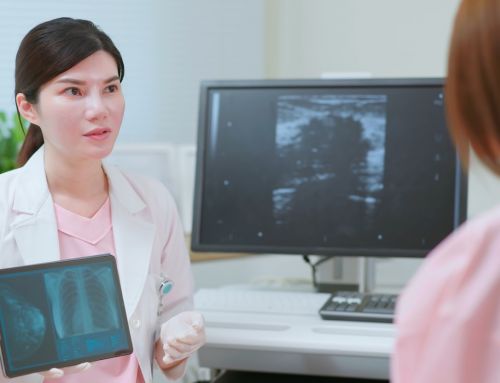

Breast lumps are common and can develop for many reasons, from hormonal changes to infections to other benign breast conditions. While most breast lumps are not cancerous, finding a new lump can understandably cause concern.
Knowing when a breast lump or other changes should be checked and what to expect at an appointment can help you take the next step without unnecessary fear. If you need to get a breast lump checked, are due for a breast cancer screening, or have questions about your breast health, look no further than the TopLine MD Alliance.
The TopLine MD Alliance provides Florida patients with access to women’s health physicians and breast health specialists who can evaluate new breast changes and determine if additional testing or treatment is needed. Learn when to get a breast lump checked, what other breast changes may warrant medical attention, and what to expect when a TopLine MD Alliance Network physician evaluates your breast lump.
When should you get a breast lump checked?
A new breast lump does not automatically mean that you have cancer – but it also should not be ignored.
Breasts contain a unique combination of fat, glands, and connective tissue, and some people’s breasts are naturally bumpier than others. Certain breast-related symptoms, such as feeling lumpy or tender, change with the menstrual cycle. Extra fluid in the breasts during this time may cause noticeable lumps. Breast tissue also changes during pregnancy, menopause, and while taking hormones.
Doing self-exams and knowing how your breasts feel most of the time makes it easier to know when something changes. You should schedule an appointment with a physician for:
- A new lump that does not go away
- A lump that grows or changes
- A lump that feels noticeably different from surrounding tissue
- Any breast change that causes concern
Time is often of the essence when it comes to breast health, especially if the lump in question ends up being cancerous. Do not wait until a breast lump becomes painful or noticeably larger before seeking evaluation.
What other breast changes should you pay attention to?
The expression “Change is good” does not apply to breast health. By being aware of what is normal for your breasts, you can hopefully notice even small changes right away.
In addition to new or growing lumps in your breast or underarm area, be on the lookout for any of the following signs:
- Changes in breast size or shape
- Skin changes like dimpling or puckering, or skin that becomes scaly, flaky, or itchy
- Unexplained redness or swelling
- Changes to your nipple, such as nipple inversion (when the nipple turns inward) or nipple discharge (especially if the discharge is bloody or occurs spontaneously)
Does a breast lump always mean cancer?
Some good news – only 10% to 20% of breast lumps are cancerous, meaning the vast majority (80% to 90%) are non-cancerous or benign. But even though most breast lumps are non-cancerous, the cause of the lump cannot be determined reliably based on symptoms or touch alone.
Benign breast lumps can have many other causes, such as:
- Breast cysts – Breast cysts are fluid-filled sacs that can form when fluid becomes trapped in the milk ducts. These cysts are most common in women who have not gone through menopause.
- Fibroadenomas – These breast lumps, consisting of fibrous and glandular tissue, most frequently appear in women between the ages of 15 and 35.
- Hormonal or menstrual changes – Hormonal shifts during the menstrual cycle, pregnancy, or menopause frequently cause swelling, tenderness, and/or breast lumps.
- Fibrocystic changes in breast tissue – Overgrowth of the fibrous tissue that holds the internal structure of a breast together is called fibrosis, which can make breast tissue feel lumpy, rubbery, or rope-like.
- Breast infections or abscesses – Infection in the breast tissue can cause a lump of hardened tissue or a breast abscess (a firm lump filled with pus) to form. These are often accompanied by pain, redness, warmth, or swelling in the breast and may also cause flu-like symptoms.
A TopLine MD Alliance Network physician can examine your breast lump, determine the cause, and guide you toward the appropriate treatment.
What happens at a breast lump appointment?
Here’s what you can expect during a typical breast lump evaluation:
- Health history – The physician asks about your symptoms, medical history, and family history, including any breast cancer history.
- Breast lump questions – The physician asks questions like when you noticed the breast lump, whether it has changed, whether it is painful or tender, and whether other symptoms are present.
- Breast exam – The physician manually feels the breast lump and the rest of your breast tissue layer by layer, checking for any abnormalities. They examine the entire breast, from your collarbone to your underarm area.
What tests may be used to evaluate a breast lump?
Imaging decisions often depend on the patient’s age, symptoms, breast exam findings, and other factors. In some cases, the physician may use the following imaging tests to evaluate the breast lump more closely:
- Diagnostic mammogram – A specialized X-ray picture of your breast
- Breast ultrasound – An imaging test that uses high-frequency sound waves to create detailed pictures of the inside of your breast
- Breast MRI – An imaging test that uses powerful magnets and radio waves to create more detailed 3D pictures of the inside of your breast
Imaging tests can detect everything from cancerous tumors to non-cancerous growths, including cysts, breast calcifications, and dense tissue. Ask your TopLine MD Alliance Network physician to learn more.
When is a breast biopsy needed?
If a breast exam or imaging test identifies an area that requires further evaluation, your TopLine MD Alliance Network physician may recommend a biopsy. This medical procedure uses a needle to remove a small sample of tissue or fluid from a suspicious breast lump or abnormal imaging area for laboratory analysis. In certain cases, a surgical biopsy to remove part or all of the lump may be necessary.
Being referred for an imaging test or biopsy does not mean that you have cancer. These steps are used to determine what the breast change in question represents.
What if your breast imaging is abnormal?
Again, an abnormal or inconclusive imaging result does not automatically lead to cancer. Additional imaging tests, short-term follow-up, or a biopsy may be recommended depending on your findings. Be sure to follow the recommended next steps and continue working with your TopLine MD Alliance Network physician, rather than assuming the result is a cancer diagnosis.
Can you monitor a breast lump at home?
Becoming familiar with the normal look and feel of your breasts so you can recognize changes is a great place to start. However, regular self-exams and monitoring at home do not replace professional evaluation or recommended screenings. A new breast lump should never be self-diagnosed based on how it looks or feels alone.
That being said, here are two simple ways to self-examine your breasts at home every month:
Visual check in the mirror
- Stand in front of a mirror with your shoulders straight and arms at your sides.
- Check your breasts for any changes, including new lumps.
- Place your hands on your hips and press down firmly to flex your chest muscles, then raise your arms above your head.
- Check for any dimpling or puckering of the skin or nipple changes.
Check while lying down
- Lie flat on your back on a bed or flat surface.
- Place a pillow under your right shoulder and put your right arm behind your head.
- Use the pads of the three middle fingers on your left hand to feel your right breast, moving your fingers in a circular motion across the entire breast.
- Use light pressure for tissue near the skin, medium pressure for deeper tissue, and firm pressure for tissue close to your ribs.
- Repeat the same process on your left breast using your right hand.
Protect your breast health with regular screenings
If breast cancer is found early, when it is small and has not spread, treatment is more likely to be successful. For women at average risk, the American Cancer Society and other health organizations recommend starting regular breast cancer screening with mammograms at age 40.
Keep in mind that regular screening is different from diagnostic evaluation. If you notice a new lump or other breast change, contact your TopLine MD Alliance Network physician right away instead of waiting for your next screening appointment.
Find a breast health specialist in Florida
The TopLine MD Alliance is a healthcare alliance of independent physicians and medical practice groups dedicated to enhancing the patient experience. By connecting Florida patients with top-tier providers, diagnostic centers, and imaging facilities across the state, the TopLine MD Alliance aims to deliver high-quality care efficiently and conveniently.
Do you need a breast lump evaluation or have another breast health concern? TopLine MD Alliance Network breast specialists and breast surgeons in Florida are ready to help. To get started, find a provider near you today.