
Whether you’re an athlete recovering from a sports-related injury or a non-athlete managing an orthopedic condition caused by age-related wear and tear, an unexpected fall, or other health reasons, you may wonder if orthopedic surgery is a viable option for you.
Everyone’s musculoskeletal system develops, changes, and transforms over time. Of course, elite athletes and people who exercise vigorously must take proper care of their musculoskeletal system to prevent injuries and improve performance. But orthopedic surgery can help people of all ages and all levels of athletic ability, even beginners, restore movement, reduce pain, and perform everyday activities more easily.
Because the idea of surgery may seem overwhelming, many patients and their family members have questions about what orthopedic surgery involves, when it’s needed, and how to prepare. From diagnostic radiologists to orthopedic surgeons, the top-tier specialists affiliated with the TopLine MD Alliance Network are ready to provide you with best-in-class orthopedic care for a wide range of orthopedic conditions.
Keep reading to find out how both athletes and non-athletes can benefit from orthopedic surgery and how the TopLine MD Alliance Network assures you get the most professional care.
The musculoskeletal system
The musculoskeletal system is a complex network that combines the skeletal system with the muscular system to support and stabilize the body, protect organs, enable motion and movement, and more.
The main components of your musculoskeletal system include:
Skeletal system
- Bones (which provide shape, support, and organ protection, for instance, your skull protects your brain, while your rib cage protects your heart and lungs)
- Joints (the areas where your bones meet)
- Cartilage (which cushions the bones within your joints)
Muscular system
- Muscles (which work with bones to create movement)
- Tendons (which connect muscles to bones)
- Ligaments (which connect bones to other bones, stabilizing the joints)
When something goes wrong with any part of your musculoskeletal system, it can greatly impact your quality of life as well as your overall health.
What is orthopedic surgery?
Orthopedics is the medical specialty that focuses on the musculoskeletal system, using surgical and non-surgical methods to treat various injuries or underlying conditions that cause pain and/or limit your ability to move. Orthopedic surgery can also be used to maintain your musculoskeletal system as you age, depending on your individual needs.
For instance, TopLine MD Alliance Network orthopedic surgeons can repair, reconstruct, or replace your:
- Hip
- Knee
- Hand
- Wrist
- Elbow
- Foot
- Ankle
- Shoulder
- Spine
Some orthopedic surgeons focus on specialty areas, such as sports medicine, joint replacement, pediatrics, oncology, or spinal surgery.
When orthopedic surgery is needed
Orthopedic surgery is generally required for conditions involving the musculoskeletal system that cause severe or chronic pain, instability, or dysfunction, especially after non-surgical treatments like physical therapy, bracing/casting, or medications do not resolve the problem.
Conditions that may need orthopedic surgery include:
Musculoskeletal injuries
- Broken bones, fractures, sprains, or strains caused by accidents, falls, or other trauma
- Ligament, tendon, or muscle injuries (such as ACL, meniscus, or rotator cuff tears)
Joint conditions
- Osteoarthritis (a degenerative joint disease that causes pain and stiffness)
- Rheumatoid arthritis (an autoimmune disease that affects the joint linings)
- Bursitis (inflammation of the fluid-filled sacs that cushion joints)
Back or neck pain
- Chronic pain (typically caused by injury, improper lifting, or degenerative disc disease)
- Herniated or slipped discs, which compress and irritate nerves
- Scoliosis (an abnormal curvature of the spine)
- Spinal stenosis (the spaces within the spinal canal become too narrow)
Hand, wrist, or elbow conditions
- Carpal tunnel syndrome (compression of the median nerve in the wrist)
- Overuse injury of the elbow (also known as “tennis elbow”)
- Fingers stuck in a bent position (also known as “trigger finger”)
Foot or ankle conditions
- Plantar fasciitis (inflammation that causes heel pain)
- Bunions (bony bumps at the base of the big toe)
Congenital birth defects
- Clubfoot (the baby’s foot is twisted inward and downward)
- Hip dysplasia (the baby’s hip joint cannot support the ball of the thigh bone)
Tumors
- Benign or malignant tumors present on bones, joints, or other parts of the musculoskeletal system
Types of orthopedic surgery
Today, the top two surgeries that orthopedic surgeons perform are ACL reconstruction and knee replacement. But there are many different types of orthopedic surgery, including:
- Arthroscopy – A minimally invasive surgery that uses small incisions to treat joint issues
- Joint replacement – Replaces damaged knee, hip, or shoulder joints with artificial parts made of biocompatible materials
- Rotator cuff repair – Repairs torn tendons in the shoulder
- Fracture fixation – Uses plates, screws, or rods to stabilize broken bones
- Carpal tunnel release – Relieves pressure on the median nerve in the wrist
- Bunionectomy – Removes bunion(s) on the foot
- Spinal fusion – Joins two or more vertebrae to decrease painful motion
- Laminectomy – Removes part of a vertebra to create more space for nerves
- Discectomy – Removes part of a spinal disc that is compressing a nerve
- Bone grafting – Transplants healthy bone tissue to repair defects
Before orthopedic surgery
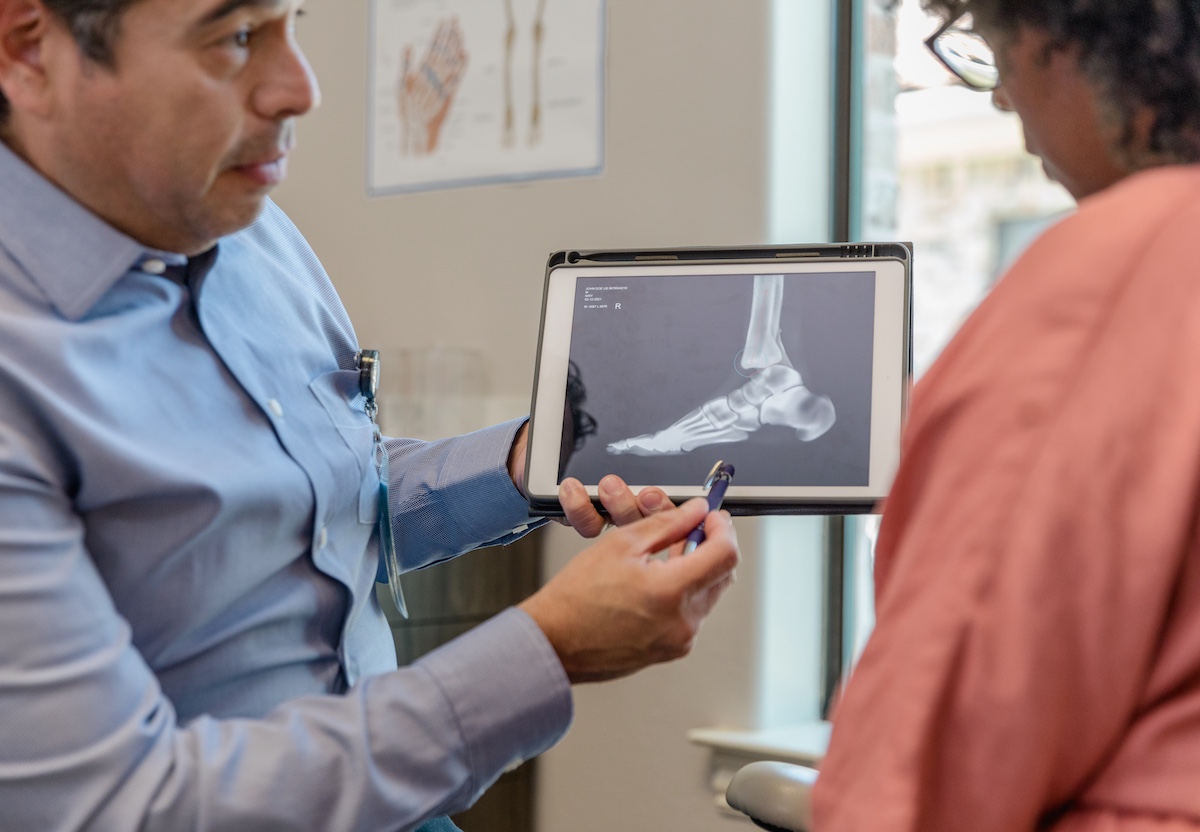
After your injury or condition is officially diagnosed, you will meet with a TopLine MD Alliance Network orthopedic surgeon who specializes in the type of surgery you need. During this consultation, your orthopedic surgeon will take a complete medical history, examine the part of your body that requires surgery, and review any imaging tests you have completed (such as X-rays, MRIs, or CT scans).
Next, your orthopedic surgeon will explain the risks and potential complications of your surgery, along with your expected recovery time. After all your questions are answered, the final step is to schedule your surgery.
If you have a severe break or fracture, you may need immediate surgery with little to no wait time. If your surgery is elective, your orthopedic surgeon may schedule the procedure anywhere from a few days to months later, based on your unique situation.
Preparing for orthopedic surgery
There are many things you can do ahead of time to help your orthopedic surgery go more smoothly:
- Confirm your insurance coverage and understand any out-of-pocket costs
- Schedule and complete any necessary blood tests, imaging tests, or other activities
- Eat a nutritious diet before surgery to give your body the best chance for a successful outcome
- Work with a physical or occupational therapist for any pre-surgery exercises
- Pack a small hospital bag with comfortable clothes and other essentials
- Arrange for a family member or friend to help with your transport and/or recovery
- Follow all other pre-surgery instructions, such as fasting or medication changes
- Use relaxation techniques to manage any anxiety you feel
- Stay positive! The results of orthopedic surgery can be life-changing
Day of surgery
Be sure to arrive at the hospital or surgical center at your scheduled time, so you can complete any required paperwork and pre-surgery assessments. You will meet with a member of your surgical team and an anesthesiologist before the surgery begins.
After orthopedic surgery
The recovery process after orthopedic surgery varies, but you will likely go home after staying in the recovery room for a few hours or stay in the hospital overnight for observation. Your surgical team will give you detailed instructions for taking care of your surgical site, including what activities are safe to do.
Remember, you will need plenty of rest as you heal, and depending on what type of orthopedic surgery you had, you may be resting for several days until your body feels well enough. Your TopLine MD Alliance Network orthopedic surgeon will let you know when it’s safe to resume your everyday routine.
Your orthopedic surgeon will also schedule follow-up appointments to track your healing process, so be sure to attend them all. You may also need to participate in physical therapy to rebuild strength in the part(s) of your body that had surgery.
The benefits of orthopedic care
Orthopedic care isn’t just for athletes. If you do any amount of walking in your life, chances are that you will need to consult an orthopedist and/or orthopedic surgeon someday. It’s just as easy to sprain your ankle while walking on a slippery surface as it is while playing sports.
In fact, orthopedic care is likely to become more relevant to your life when you’re less active. Spending too much time sitting can lead to painful arthritis. Rusty and over-confident gym goers are prone to injuring themselves when they start working out again. Even stepping off a curb the wrong way can result in a visit to the orthopedic surgeon’s office.
Orthopedic surgery can treat and repair any part of the musculoskeletal system, providing long-term relief from chronic pain and other issues for athletes and non-athletes alike.
Find a TopLine MD Alliance Network orthopedic surgeon
The TopLine MD Alliance was created by physicians who came together to make healthcare experiences better for patients. We help patients navigate the complex healthcare system, connecting them with top-tier healthcare providers, practices, diagnostic centers, and imaging centers we trust.
The TopLine MD Alliance brings together high-quality care, exceptional service, and compassionate support while ensuring that you are always satisfied with your choice of medical providers. In addition to orthopedic surgery, our specialties include diagnostic radiology, internal medicine, family medicine, pediatrics, endocrinology, pediatric endocrinology, family medicine, internal medicine, and so many more.
To get started, find a provider near you today.