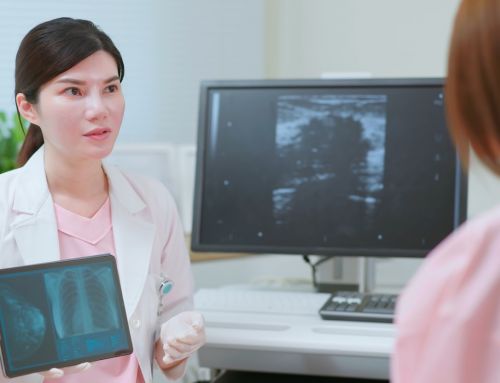

Like no two breasts are exactly the same, neither are breast lumps. Many people’s breasts are naturally bumpy in texture, and some people have lumpier breasts than others. If your breasts feel the same on both sides, breast lumps may be normal for you. But a breast lump that feels harder or different from the rest of your breast tissue could be a cause for concern.
Don’t panic just yet. While breast lumps are one of the most-recognized signs of breast cancer, there are many other conditions that can cause breast lumps – in fact, 8 out of ten breast lumps are benign (non-cancerous). However, it’s a good idea to familiarize yourself with how your breasts normally look and feel so you will notice when breast lumps or other changes occur. Keeping up with routine self-exams and annual breast cancer screenings is also essential for early detection and peace of mind.
TopLine MD Alliance Network physicians provide access to breast health specialists and network practices across Florida who can evaluate breast changes, determine whether additional testing is needed, and guide patients toward the appropriate care. Keep reading to learn what a breast lump may feel like, what can cause benign breast lumps, when a breast lump should be evaluated by a doctor, and more.
What does a breast lump feel like?
A breast lump is a mass or growth that develops within your breast and feels different from the tissue surrounding it. Depending on what is causing the breast lump, it may be tender or painful. Often, you may experience no discomfort whatsoever.
Breast tissue naturally has some texture and may feel different depending on age, hormones, menstrual cycle, pregnancy, breastfeeding, and other factors. Breast lumps also vary in size and location. For instance, some breast lumps are as large as a golf ball, while others are as tiny as a pea. Breast lumps can occur anywhere from deep within your breast tissue to near your armpit area.
It’s common to have a breast lump that feels:
- Bumpy
- Hard or firm
- Soft or squishy
- Smooth or rubbery
- Round
- Irregularly shaped
Breast lumps can also be movable, especially during the early stages, and then become less movable as they adhere to deeper breast tissue.
A note for breastfeeding mothers: A breast lump while breastfeeding may be a symptom of engorgement (the swelling of the breasts that occurs soon after giving birth) or a clogged milk duct (when breast milk cannot flow through the breast to the nipple because the duct is blocked). Contact a TopLine MD Alliance Network physician if these issues do not resolve on their own within a few days.
What does a cancerous breast lump feel like?
The feel and appearance of cancerous breast lumps also vary, but a hard lump that feels very different than the surrounding breast tissue is the most common sign of breast cancer. A cancerous breast lump often feels more like a small rock than a soft grape and becomes less movable over time.
Here are some other symptoms to watch for that could indicate a cancerous breast lump:
- Changes in the size or shape of your breast
- Skin changes like dimpling, puckering, bulging, or redness (especially if you can see these changes with your arms raised overhead)
- Breast pain that is localized in one spot
- Edges that feel uneven, jagged, or asymmetrical instead of smooth
- Changes to your nipple, such as nipple inversion (when the nipple turns inward), nipple discharge (especially if the discharge is bloody), or a scaly rash
Always remember that breast cancer can present differently from person to person – and sometimes, breast cancer may not produce a noticeable lump at all.
Are painful breast lumps usually cancer?
Just the opposite – painful breast lumps are typically caused by non-cancerous conditions (see below). Cancerous breast lumps are usually painless at first, then become more painful as they grow into nearby tissue.
Because you cannot tell if a breast lump is safe or dangerous by how much it hurts, any persistent, new, or unexplained breast lump should be evaluated.
What are common causes of benign breast lumps?
There are many causes of benign breast lumps, ranging from hormonal shifts to breast tissue changes to infections. Here are some of the most common ones:
- Fibrocystic changes in breast tissue – Overgrowth of the fibrous tissue that holds the internal structure of a breast together is called fibrosis, which can make breast tissue feel lumpy, rubbery, or rope-like.
- Breast cysts – Breast cysts are fluid-filled sacs that can form when fluid becomes trapped in the milk ducts. These cysts are most common in women who have not gone through menopause.
- Fibroadenomas – These breast lumps consisting of fibrous and glandular tissue most frequently appear in women between the ages of 15 and 35.
- Breast infections – Infection in the breast tissue can cause a lump of hardened tissue or a breast abscess (a firm lump filled with pus) to form. Breast infections are often accompanied by pain, redness, warmth or swelling in the breast and may also cause flu-like symptoms.
- Breast calcifications – Very large calcium deposits in the breast can feel like large, hard lumps. Breast calcifications may occur due to aging, past injury, breast surgery, or other reasons.
When should you see a doctor about a breast lump?
It is never possible to determine if a lump is cancerous based on how it feels alone, especially since breast tissue is naturally lumpy. A breast lump that is hard, painless, irregularly shaped, or fixed in place may warrant medical attention, but non-cancerous breast lumps can have similar characteristics. Likewise, breast cancer does not always cause a hard or painless lump.
Contact a TopLine MD Alliance Network physician right away if you notice any of the following:
- A new lump in your breast or underarm that does not go away
- A lump in your breast or underarm that grows or changes in size
- A lump in your breast or underarm that feels noticeably different from surrounding tissue
- Pain, tenderness, redness, or swelling in your breast
- Other breast changes, such as dimpling or puckering skin
- Nipple changes, including nipple inversion, spontaneous nipple discharge (particularly bloody discharge), or a scaly rash
A TopLine MD Alliance Network breast health specialist can figure out the cause of the breast lump and if you need treatment. Don’t put off taking care of your breast health – if the lump is cancerous, treatment is most successful if started early. You do not need to wait until a breast lump becomes painful or noticeably larger before seeking evaluation.
How is a breast lump evaluated?
Have you found a breast lump? Here’s what you can expect at your initial appointment with a TopLine MD Alliance Network physician.
- Health history – The physician asks about your symptoms, medical history, and family history, including any breast cancer history.
- Discussion about breast changes – The physician gathers information about the breast changes you are experiencing.
- Breast exam – The physician manually feels your breast tissue layer by layer, checking for lumps, size or shape differences, and nipple abnormalities. They examine the entire breast, from your collarbone to your underarm area.
- Mammogram, breast ultrasound, and/or breast MRI – A diagnostic mammogram, breast ultrasound, and/or breast MRI may be used to create detailed images of your breast and identify the cause of the lump.
If the breast exam and/or imaging identifies an area that requires further evaluation, you may have a breast biopsy. This medical procedure uses a needle to remove a small sample of tissue or fluid from a suspicious breast lump or abnormal imaging area, so it can be tested for cancer and other conditions. In certain cases, a surgical biopsy to remove part or all of the lump may be necessary.
Remember, being referred for diagnostic imaging or a biopsy does not mean that you have breast cancer. It only means that you need further examination to determine the cause of your breast lump.
Can you check your breast for lumps at home?
Definitely! Paying attention to your breasts is key, as are routine self-exams. Become familiar with the normal look and feel of your breasts, so you can recognize any changes and report any concerns (including new lumps) to your TopLine MD Alliance Network physician.
Try to examine your breasts each month, preferably a few days after your menstrual cycle starts when your breasts are less tender and swollen.
Visual check in the mirror:
- Stand in front of a mirror with your shoulders straight and arms at your sides.
- Check your breasts for any changes, including new lumps.
- Place your hands on your hips and press down firmly to flex your chest muscles, then raise your arms above your head.
- Check for any dimpling or puckering of the skin or nipple changes.
Check while lying down:
- Lie flat on your back on a bed or flat surface.
- Place a pillow under your right shoulder and put your right arm behind your head.
- Use the pads of the three middle fingers on your left hand to feel your right breast, moving your fingers in a circular motion across the entire breast.
- Use light pressure for tissue near the skin, medium pressure for deeper tissue, and firm pressure for tissue close to your ribs.
- Repeat the same process on your left breast using your right hand.
While self-examination is helpful, it should never be considered a replacement for professional breast screenings. Ask your TopLine MD Alliance Network physician to learn more.
Protect your breast health with regular screenings
If breast cancer is found early, when it is small and has not spread, treatment is more likely to be successful. For women at average risk, the American Cancer Society and other health organizations recommend starting regular breast cancer screening with mammograms at age 40.
Keep in mind that regular screening is different from diagnostic evaluation. If you notice a new lump or other breast change, speak with your physician ASAP rather than waiting for your next screening appointment.
Find a breast health specialist in Florida
The TopLine MD Alliance is a healthcare alliance of independent physicians and medical practice groups dedicated to enhancing the patient experience. By connecting Florida patients with top-tier providers, diagnostic centers, and imaging facilities across the state, the TopLine MD Alliance aims to deliver high-quality care efficiently and conveniently.
Breast health and breast surgery are two of many women’s health specialties that TopLine MD Alliance Network physicians offer. To get started, find a provider near you today.